Secret mountain base or trap base in Rust which build keeps a solo alive longer
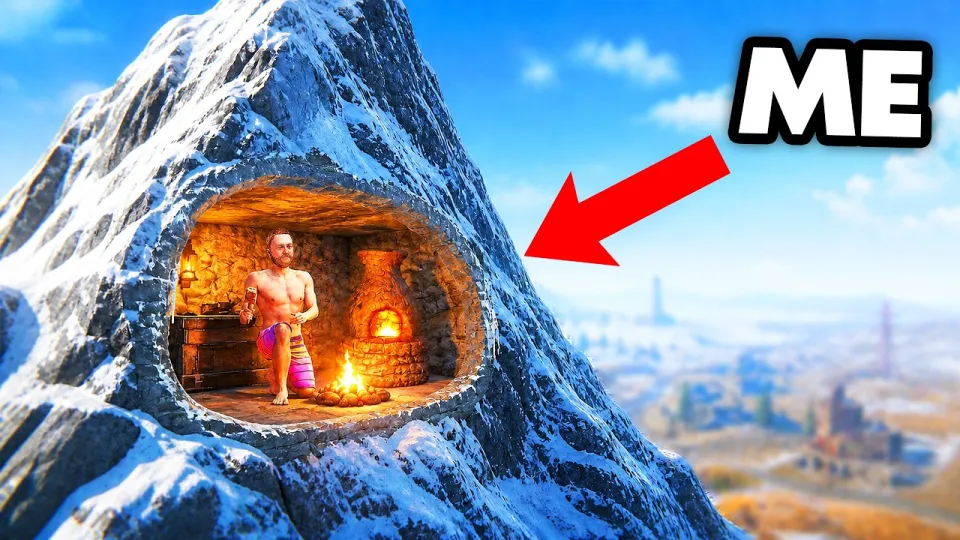
Video: I Lived in a Secret Mountain Base in Rust
Want articles like this for your own video to promote it on YouTube and Google? Order them through the Telegram bot @sat_sit_bot. Articles with your video embedded are written and posted by the bot itself — on popular topical sites (no ads). Free trial — 50 articles.
· based on the channel Memeio
Key takeaways
- A hidden mountain base in Rust works only if the spot is genuinely awkward to reach, not just high up with a 2x2 silhouette against the sky.
- Small footprints (1x1, 2x1, 1x2) with stone or wood shells are cheaper to replace than to defend when a solo is offline.
- Trap bases trade stealth for kills and attention: every successful trap marks the grid for the rest of the wipe.
- Broken wooden spears can be recycled into stone spears, effectively doubling early raiding tools for the cost of some stone.
- Cheaters remain the main counter to any hidden base, so a stash of backup loot off-site matters more than camouflage.
A secret mountain base in Rust is the better choice for a solo player when the goal is survival rather than kills: a small, awkwardly placed structure that nobody bothers to raid costs less than a trap base that invites retaliation. A trap base is better only when you want fights and can afford to lose the build, because every victim turns your grid into a target. The author of the build experiment tracked here, Memeio, leans on the first option — and his own audience is quick to point out where the camouflage stops working. Updates and clips from the channel land on Memeio's X profile.
Why a secret mountain base in Rust beats a flashy build for solos
Rust rewards players who are boring to raid. A solo cannot hold a main base against a clan, so the practical defence is a location nobody scouts and a footprint nobody wants to spend explosives on. Mountain terrain does three useful things at once: it limits approach angles, it hides silhouettes from the road, and it makes foundation placement awkward enough that most players skip the area entirely.
The catch is that "high up" is not the same as "hidden". A 2x2 with a triangle roof sitting on a ridge is visible from half the map, and experienced players check mountain tops precisely because they expect a solo to be there. Real concealment comes from building into a fold in the terrain — a dip behind a rock shelf, a spot where the slope hides the walls from below — and from keeping the structure small enough that it reads as part of the landscape.
- Footprint: 1x1 or 2x1 with a single door is easier to hide than a 2x2 with an airlock.
- Materials: a stone shell is the minimum worth placing; wood invites every passing bow player.
- Access: one narrow path in, ideally one that requires jumping, discourages casual door checks.
- Storage: split loot between the base and a stash, so a single raid is not a wipe-ending event.
Hiding versus trapping and what each build actually costs
A trap base and a hidden base solve different problems, and mixing them up is how solos lose their wipe. A trap base is an offensive structure: you build a corridor, bait a player inside, and profit from their kit. It is fun, it produces clips, and it also produces enemies who remember the grid. A hidden base is defensive: it produces nothing except the ability to log in tomorrow with your loot intact.
The economics are simple. A trap base needs enough space for the bait room and the kill mechanism, which means a larger footprint and more attention from neighbours. A hidden base can be a single square with a box and a furnace, replaced in twenty minutes if it dies. For a player with two hours a day, the second option compounds; the first one resets.
There is a middle path that experienced solos use: keep the hidden base as your real home and place a throwaway trap structure somewhere else, ideally in a grid you do not care about. You get the entertainment without painting a target on your storage.
What the audience gets right about camouflage and luck
Viewers of the mountain-base video made two sharp observations that apply to every Rust solo run. The first is that camouflage which only hides you from players who are not looking is not camouflage at all — a structure that is invisible from the road but obvious from the ridge is a coin flip, and the ridge is where raiders go. The second is that convenient early loot, the kind that appears at the start of most edited Rust videos, is not a strategy you can plan around; it is a bonus when it happens.
The honest version of base hiding looks like this:
- Scout the location on foot at ground level and from the nearest high point, and check whether your roof breaks the skyline.
- Build the smallest shell that holds a tool cupboard, a box, a furnace and a bed, then upgrade the exposed faces first.
- Keep the door facing away from the natural approach so a passer-by sees rock, not a frame.
- Move high-value loot to a second stash within a short walk, and never log off with everything in one box.
- Re-check the spot after every nearby fight; a base that survived three days is a base someone has now seen.
Early-game tricks that make a small base viable
A hidden base only pays off if you can equip yourself without a large footprint, and the early economy matters more than the camouflage. One trick the community keeps repeating is spear recycling: broken wooden spears can be turned into stone spears, so a bit of stone effectively doubles the number of usable raiding tools you carry. The order matters — keep broken spears ahead of intact ones in the inventory so crafting picks the right item.
Other low-cost habits that keep a mountain solo alive:
- Craft bows and arrows in batches before you leave the base, not at the door of the target.
- Use stone tools for nodes and save metal fragments for doors and locks.
- Run monuments at off-peak hours; a small base near a quiet monument beats a great base near a busy one.
- Keep a sleeping bag in a bush a few grids away as an emergency respawn.
When a trap base is the right call in Rust
A trap base is the right call when your goal for the session is player interaction, not progression. If you have a secure place to store the kit you actually care about, a cheap trap structure becomes a hobby rather than a gamble. The moment it becomes your only base, the maths flips: every kill you score adds a player who knows your grid, and Rust servers have long memories.
Practical rules for keeping a trap build from ruining your wipe:
- Never store more than one kit inside the trap structure.
- Place it at least a few grids from your real base, and never use the same approach path.
- Expect the trap to be raided within a day or two of its first successful kill.
- Do not reuse the same design on the same server; regulars learn the bait room fast.
Cheaters and other limits no base design solves
No amount of mountain camouflage fixes the biggest risk on populated servers: cheaters. A player using ESP sees your boxes through rock, and a hidden 1x1 is as visible to them as a clan compound. The practical response is not better hiding but better distribution — assume anything in one container can disappear and keep a second location stocked.
The same logic applies to offline raiding. A base that looks empty is less interesting than a base that looks rich, so avoid external signs of wealth: no visible large furnace smoke, no wind turbine silhouette on a ridge, no parked vehicles. If the structure must be seen, it should look like it holds nothing worth the explosives.
Useful links
- Memeio on X — channel updates, clips and announcements.
- Epidemic Sound — the music library credited for the video's soundtrack.
The verdict on hiding a base in Rust
For most solo players, a secret mountain base in Rust is the stronger long-term play: it is cheap, replaceable, and it keeps your progression intact between sessions, which is the only currency that matters on a wipe. A trap base is worth building as a side project once your real loot is somewhere safe, because it generates fights and content but also attention. The build in Memeio's mountain experiment is best read as entertainment with a real lesson underneath — the camouflage is only as good as the approach route, and the loot is only as safe as its second copy. If you want more of these wipe-long experiments and the arguments they spark in the comments, follow the channel via Memeio's X account.
Source: I Lived in a Secret Mountain Base in Rust · Markdown version
Questions & answers
Is a secret mountain base actually safe in Rust?
It is safer than an exposed build of the same size, but not invisible. A small stone footprint in awkward terrain avoids casual raiders, while anyone scouting from a ridge or using ESP will still find it, so keep a second stash of important loot.
Should a solo player build a trap base or a hidden base first?
Build the hidden base first and treat it as your real home. A trap base is a side project that produces kills and enemies; placing it a few grids away from your storage lets you enjoy it without risking the wipe.
How small should a hidden base be to stay unnoticed?
A 1x1 or 2x1 with a tool cupboard, box, furnace and bed is enough for early progression. Anything larger increases the silhouette and the chance that a passing player notices a door frame or a roof line.
Do cheaters make hidden bases pointless?
They remove the advantage of camouflage, since ESP shows containers through terrain. The counter is distribution rather than better hiding: split loot across locations and assume any single box can be lost.