What Rust really rewards, a 14,782-hour solo veteran or a fresh wipe start, and why the hours win
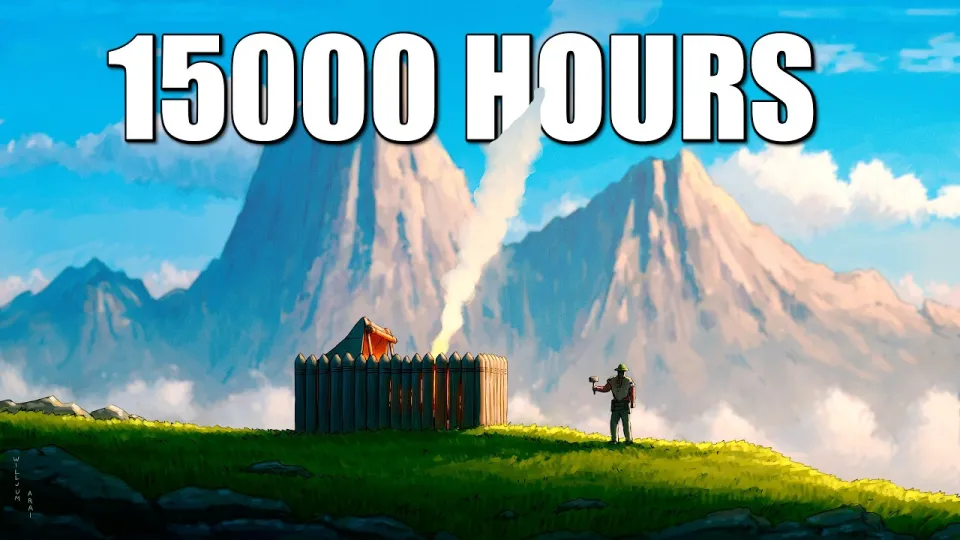
Video: How a solo with 14,782 Hours plays official rust...
Want articles like this for your own video to promote it on YouTube and Google? Order them through the Telegram bot @sat_sit_bot. Articles with your video embedded are written and posted by the bot itself — on popular topical sites (no ads). Free trial — 50 articles.
· based on the channel Willjum
Key takeaways
- Willjum's solo account shows 14,782 hours of Rust played, roughly 1,180 hours per year since early access in 2013.
- The run is on an official vanilla server as a solo, with no team, no mods and no boosted gather rates.
- The base build in the video comes from creator Luca Builds and uses a decoy mannequin in a window to draw fire.
- Vanilla Rust wipes force a full reset of bases, blueprints progress and loot, so every wipe restarts the same race.
- Willjum's own servers include solo-only Thursdays on willjum.eu (EU) and willjum.us (NA), plus casual duo monthlies.
Rust rewards the player who has already made every mistake once. A solo with 14,782 hours does not win because of faster aim or better luck, but because of pattern recognition: where to put a base, when to farm, when to fight and when to walk away. That accumulated knowledge, not raw mechanics, is what separates a veteran solo from a fresh wipe start, and it is the single biggest advantage in the game. Willjum's official-server solo run is a clear demonstration of that gap, and the gear he leans on for the long sessions is the Manscaped Beard Hedger Plus offer promoted in the video.
What 14,782 hours of Rust actually represents
The number is the headline, and it holds up to scrutiny. 14,782 hours spread across Rust's lifespan since early access in 2013 works out to roughly 1,180 hours per year, or about three hours a day, every day, for over a decade. If you count only from the 2018 full release, the average climbs to roughly 1,850 hours per year, close to a full-time job.
That volume of play produces a specific kind of literacy:
- Map knowledge — spawn points, monument loot tables, common base spots and the routes raiders take.
- Audio reading — footsteps, gunfire distance, and which sounds mean a raid is forming.
- Economy sense — how much scrap a wipe realistically generates and what it should be spent on.
- Timing — knowing when a server is quiet, when groups are raiding, and when to move loot.
- Social calibration — which neighbours to trade with and which to avoid entirely.
None of these show up in a stat screen, but all of them decide whether a solo survives day two.
Solo on official vanilla versus a boosted server
Official vanilla is the harshest classroom because nothing is accelerated. Gather rates are 1x, wipe cycles reset everything, and a solo competes against groups who can farm, build and raid in shifts. Boosted and modded servers compress the same decisions into hours instead of days, which is why they feel easier but teach less.
The trade-off is straightforward. Vanilla forces discipline: you cannot out-farm a clan, so you out-plan them. On a 2x or 3x server, a bad base location is survivable because you can rebuild quickly; on official, a bad location costs you the wipe. That is why veteran solos treat base placement as the most important decision of the first hour, not the last.
How a veteran solo structures a wipe
The opening hours follow a repeatable sequence rather than improvisation. A typical high-hour solo run looks like this:
- Land away from the busiest monuments but within walking distance of a recycler.
- Build small and unremarkable first; a 2x2 with an airlock and stone upgrade beats a half-finished compound.
- Secure a workbench and research the tools that matter before spending scrap on weapons.
- Bank loot in stashes and secondary boxes so a single raid does not end the wipe.
- Use decoys — the mannequin placed in a window in this run is a textbook example, drawing fire and revealing where attackers shoot from.
The discipline extends to crafting. Veterans often talk about not wasting scrap on guns while quietly producing a steady stream of cheap, replaceable weapons, because a nail gun you can lose is worth more than a rifle you are afraid to use.
PvP decisions that separate experienced players from new ones
Experience shows up most clearly in fights a player chooses not to take. A new solo sees two geared opponents and either freezes or charges; a veteran counts the risk, checks the escape route and usually leaves. When a fight does happen, it is because the veteran picked the ground, the timing and the first shot.
That is also why the "peaceful farmer" framing is misleading. Survival on official servers is not pacifism; it is selective aggression. The hours produce the judgment to know that a fight over a crossbow is not worth a respawn and a lost kit, while a fight over a locked crate or a passing duo's loot is.
Common doubts about high-hour solo play
A few recurring questions come up around runs like this, and they have practical answers.
- Do the hours include idle time? Some of them certainly do; players leave clients logged in. But the decision-making on screen is not something an idle client produces, and the base management, rotations and fight selection all reflect real practice.
- Can a new player copy the approach? The sequence is copyable even if the instincts are not. Small base, recycler access, cheap weapons, banked loot, and a rule against chasing fights you did not start.
- Is official solo actually enjoyable? It is slower and harsher than modded play, but the stakes are what make the decisions meaningful. Many viewers watch Rust without playing it precisely because that tension reads well on screen.
- Does gear matter more than hours? No. A modest kit in the right hands beats a full kit in the wrong position, and the veteran's edge is positioning, not inventory.
Links from the video
- Manscaped Beard Hedger Plus offer: https://manscaped.com/willjum
- Willjum on Patreon: https://www.patreon.com/Willjum
- Willjum on Twitch: https://www.twitch.tv/willjum
- Willjum on Twitter: https://twitter.com/willjum1
- Creative Commons Attribution 4.0 license referenced in the credits: http://creativecommons.org/licenses/by/4.0/
Final takeaway on Rust solo survival
Hours in Rust convert into decisions, and decisions convert into survival. A solo with 14,782 hours plays official servers with a plan for the first hour, a plan for the raid that will eventually come, and a clear rule about which fights are worth taking. The gap between a veteran and a fresh wipe is not reflexes but structure: base placement, scrap economy, decoys, banked loot and restraint. Willjum's breakdown of this solo run is the clearest illustration of that principle, and if you want the gear setup used for the long sessions, the Manscaped Father's Day deal is the link from the video.
Source: How a solo with 14,782 Hours plays official rust... · Markdown version
Questions & answers
How is 14,782 hours of Rust even possible?
It works out to roughly 1,180 hours per year since Rust entered early access in 2013, or about three hours a day. Counting from the 2018 full release, the average rises to about 1,850 hours per year, close to full-time work. Some of that time is idle client uptime, but the in-game decisions reflect genuine practice.
Is playing solo on official vanilla servers worth it compared to boosted servers?
Vanilla is slower and far less forgiving, because 1x gather rates and full wipes mean a bad base location can cost you the entire cycle. That pressure is exactly what teaches planning, scrap discipline and fight selection. Boosted servers are faster and easier, but they let you get away with mistakes vanilla punishes.
What makes a high-hour solo player different from a new one?
Mostly judgment rather than aim. Veterans place small, low-profile bases near recyclers, bank loot in stashes, use decoys like a mannequin in a window, craft cheap replaceable weapons, and decline fights they did not choose. A newer player tends to charge the first geared pair they see and lose the kit.
Do I need to play Rust to enjoy watching these long solo videos?
No. A large part of the audience never touches the game and watches for the pacing, the base builds and the tension of near-misses. The commentary and music carry the long format, and the decision-making is readable even without firsthand knowledge of the mechanics.